Build on a slope and the ground itself becomes your biggest project risk. Sloped blocks dominate large parts of South-East Queensland, from the Gold Coast hinterland to Brisbane’s hillside suburbs, and every degree of fall changes how soil moves, water drains, and load behaves. Choosing the wrong system means wall failure, council headaches, or expensive rework. This guide covers why retaining walls for sloped land demand a different approach, what the common options look like, and how interlocking precast blocks compare against the alternatives.
Why Sloped Blocks Are Challenging in Queensland
Sloped sites carry forces that flat blocks never have to deal with. Gravity, saturated soil, and hydrostatic pressure all push downhill, and any retaining structure has to resist that load every day for decades. Queensland’s climate makes the problem sharper, with intense wet seasons, cyclonic rainfall, and clay-heavy soils that swell and contract through the year.
The main challenges builders face on sloped Gold Coast and Queensland sites include:
- Soil instability: Clay and sandy loam soils common across South-East Queensland shift under load, particularly after heavy rain, increasing the risk of slope failure
- Hydrostatic pressure: Water trapped behind a wall builds up force quickly on sloping sites where natural runoff is concentrated
- Surcharge loads: Driveways, pools, structures, or vehicles above the wall add significant pressure that flat-site walls never have to manage
- Council compliance: Walls over one metre, or those near boundaries or supporting a surcharge, require engineering certification under AS4678
- Access and installation logistics: Steep gradients limit machinery access and slow down trades reliant on cast-in-place methods
These challenges mean that the system you choose isn’t a cosmetic decision. It determines whether the wall holds, drains, and passes inspection.
Common Retaining Wall Options for Sloped Blocks
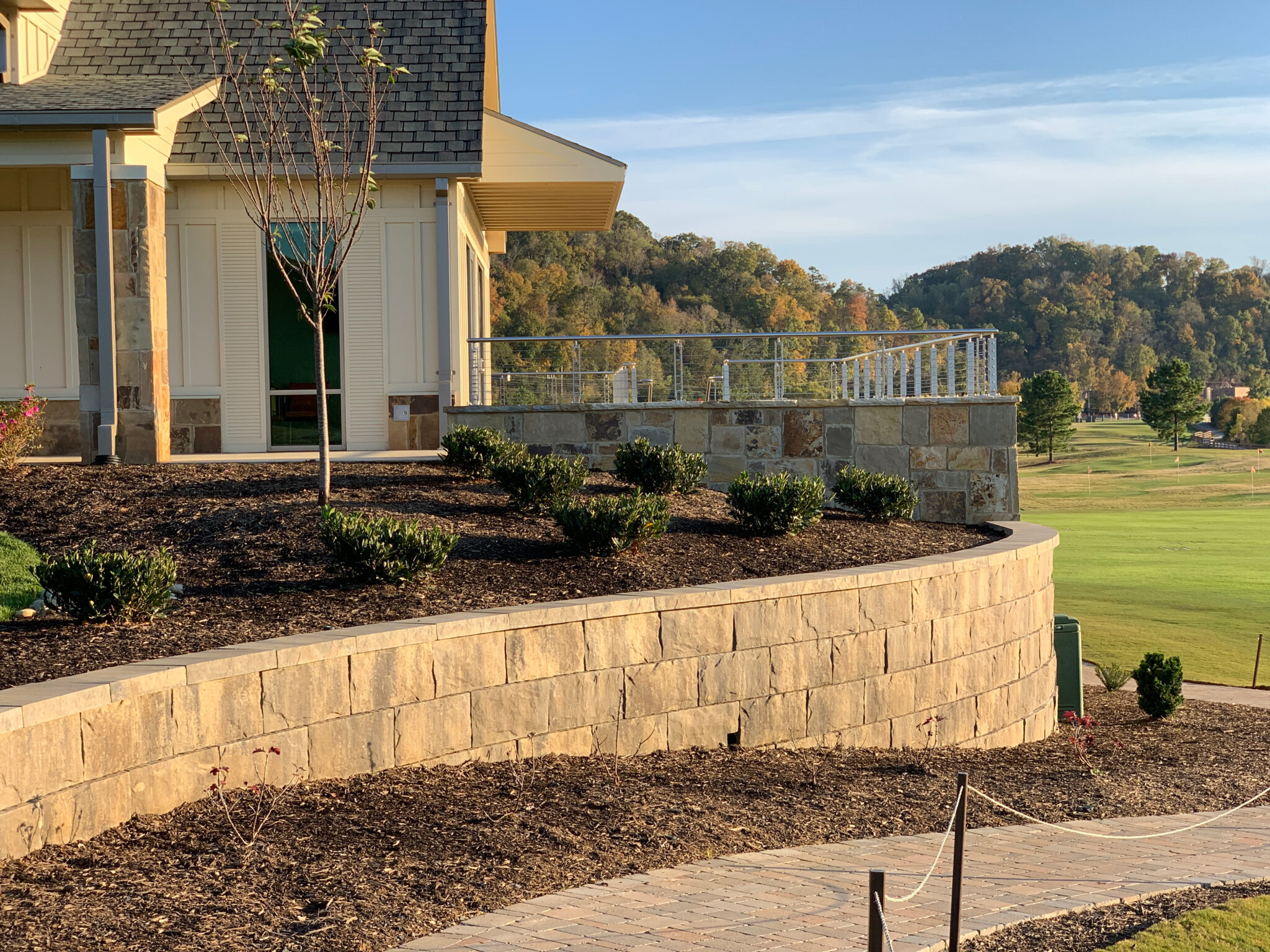
Sloped sites in Queensland are typically built using one of four wall systems, each with trade-offs in stability, cost, and longevity. Understanding the options is the first step in choosing what suits your block, particularly for retaining walls for sloped backyards on the Gold Coast where residential sites add design and council considerations of their own.
- Timber sleeper walls: Cost-effective and quick to install for low walls, but timber rots in Queensland’s wet climate and rarely lasts beyond 15 to 20 years on sloped sites
- Poured concrete walls: Strong and customisable, but slow to construct, weather-dependent, and difficult to install on steep blocks where formwork access is limited
- Rock or boulder walls: Visually appealing and long-lasting, but heavy, expensive to transport, and difficult to engineer for high surcharge loads
- Interlocking precast concrete blocks: Manufactured off-site to AS4678, modular by design, and built for the structural demands of sloped Queensland sites without the speed and access trade-offs of poured concrete
Each system has a place, but the demands of sloped land narrow the field quickly once you factor in stability, drainage performance, and build speed.
What Makes the Best Retaining Wall System for QLD Sloped Sites?
The best retaining wall system QLD builders choose for sloped land is the one that performs across all the criteria that matter, not just one. A wall might be cheap to install but fail council inspection. It might look great but wash out in the next storm. The systems that hold up across the board share a clear set of attributes.
When weighing up retaining wall options for sloped blocks, the criteria worth measuring against are:
- Structural capacity: The wall must resist soil and surcharge loads to AS4678 standards, especially on slopes where loads compound
- Drainage performance: The system must allow water to escape from behind the wall to prevent hydrostatic build-up
- Speed of installation: Sloped sites cost more in labour the longer trades stay on-site, so faster systems reduce overall project cost
- Compliance certainty: Engineered systems with AS4678 certification reduce approval risk with Gold Coast and other Queensland councils
- Longevity in coastal and subtropical conditions: The wall must withstand humidity, salt exposure, and freeze-free wet seasons without degradation
- Modularity and adaptability: Sloped sites rarely run in straight lines, so systems that flex around contours and tiers add real value
Measured against these criteria, interlocking retaining wall blocks Queensland-wide consistently outperform timber, rock, and poured alternatives for sloped sites. InfraBlock’s precast range is engineered against these criteria, manufactured locally on the Gold Coast to AS4678 with the modularity sloped sites demand.
Why Interlocking Precast Blocks Suit Sloped Sites
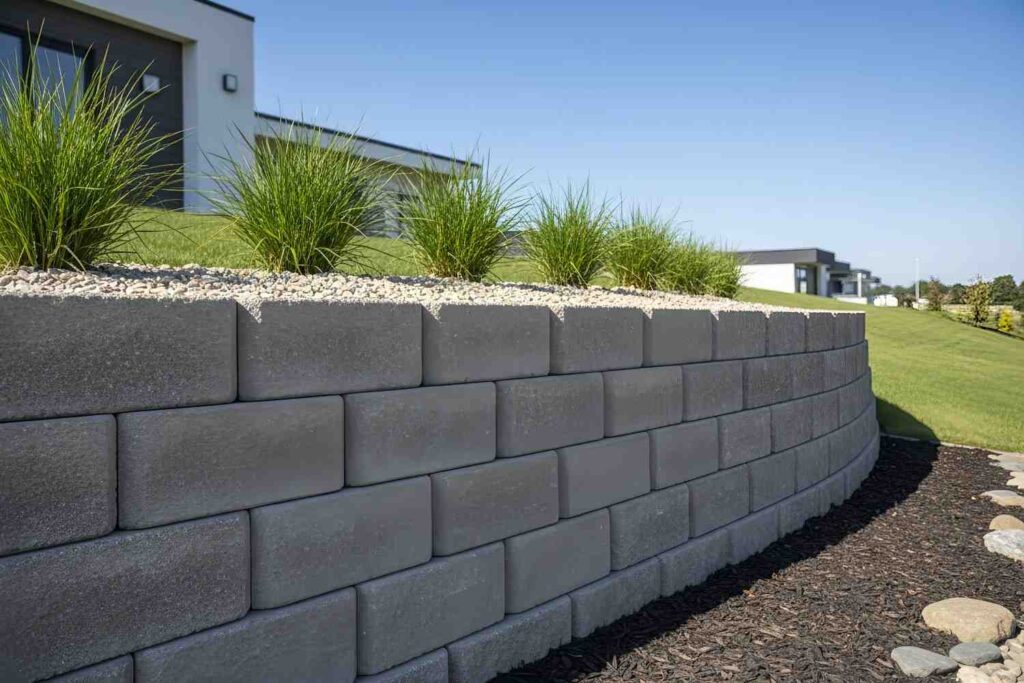
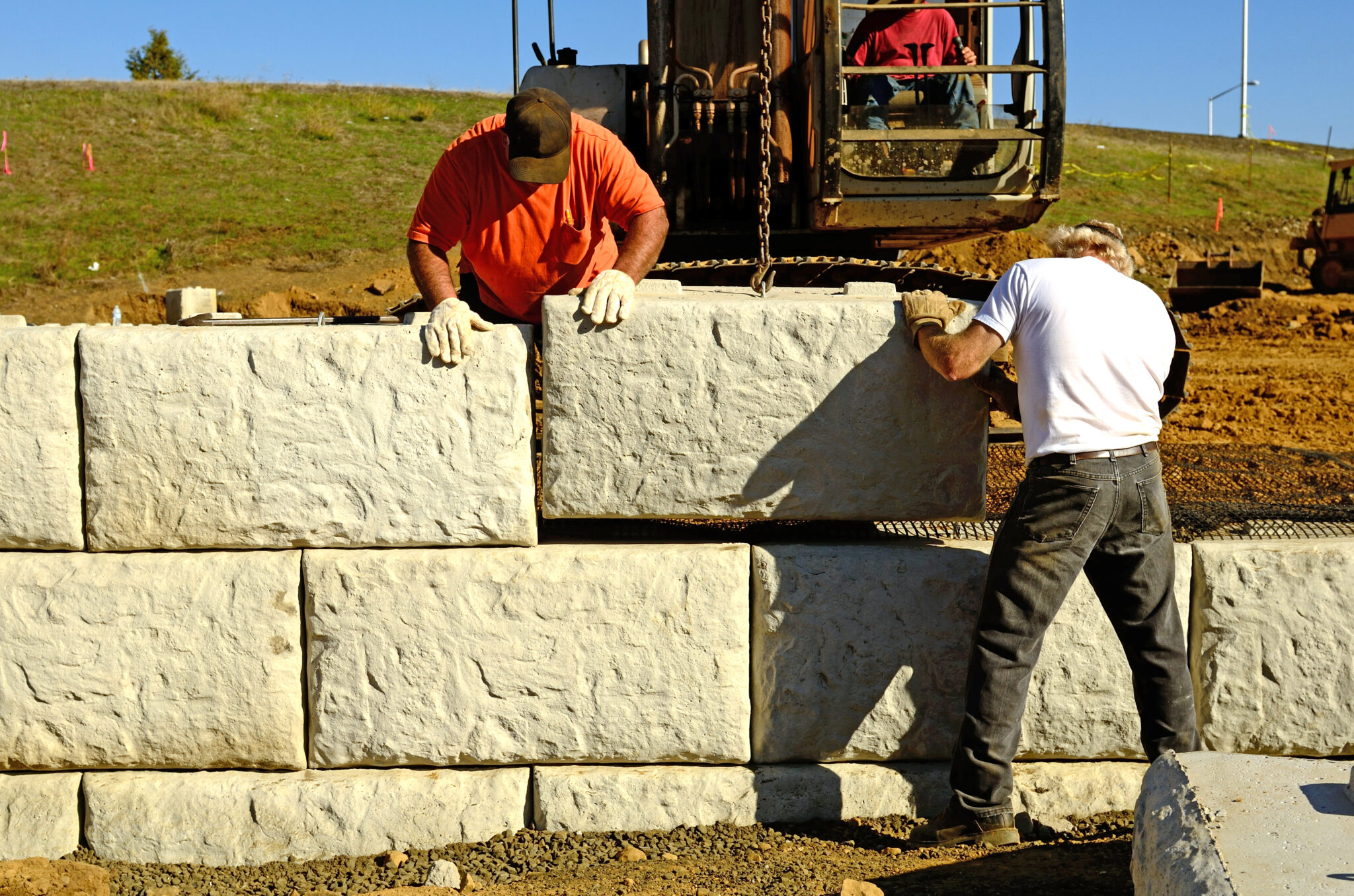
Interlocking precast blocks are engineered for exactly the conditions sloped Queensland sites throw at them. They’re manufactured off-site under controlled conditions and stacked on-site without specialist formwork or curing time, which solves the access and speed problems that slow down poured systems. The interlocking design transfers loads through the wall structure efficiently, making them suitable for low residential walls and high-load commercial applications alike.
Key advantages for sloped block construction include:
- Built to AS4678: Factory-controlled manufacturing ensures every block meets the structural standard QLD councils require for engineered retaining walls
- Rapid installation: Blocks stack quickly with standard machinery, cutting on-site time significantly compared to poured concrete
- Modular flexibility: Walls can be tiered, curved, or stepped to match contoured sloped sites without custom formwork
- High load capacity: Suitable for retaining walls that support driveways, pools, or vehicles above
- Long service life: Precast concrete withstands Queensland’s coastal humidity and wet seasons for decades without degradation
- Reusability: Blocks can be repositioned or reused on later projects, valuable for staged developments and temporary works
For builders and developers working on sloped sites across the Gold Coast and broader Queensland, structural certainty and installation speed are what make precast interlocking blocks the consistent choice. Working with a local manufacturer like InfraBlock keeps supply and certification close to hand when projects need to move.
Drainage Considerations for Sloped Retaining Walls
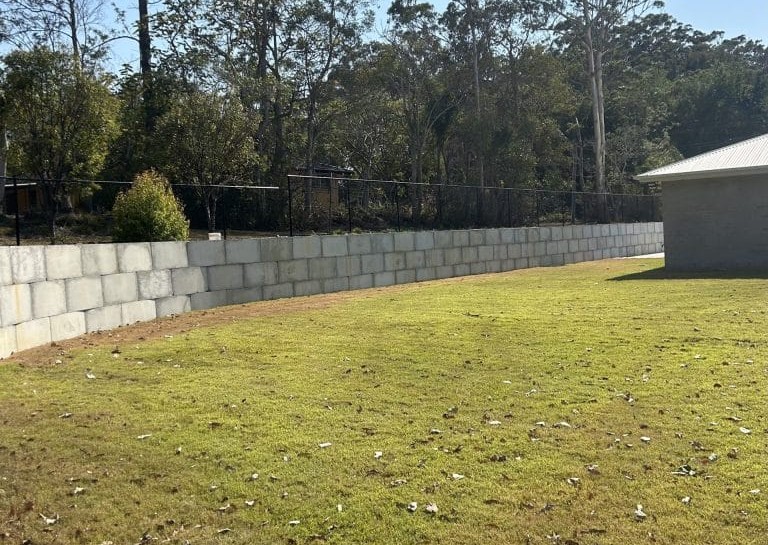
Drainage is where most sloped retaining walls succeed or fail. On a flat block, water disperses across a wider area. On a slope, every drop runs toward your wall and pools behind it. Once hydrostatic pressure builds up, even a structurally sound wall can shift, lean, or fail outright.
Effective drainage for sloped retaining walls combines several elements working together:
- Aggregate backfill: Coarse gravel placed directly behind the wall lets water move freely toward drainage outlets
- Geotextile fabric: Permeable fabric prevents soil fines from clogging the gravel and drainage channels
- Agricultural drainage pipe: Perforated pipe at the base of the wall captures water and redirects it away from the structure
- Weep holes: Strategic openings allow trapped water to escape through the wall face, reducing pressure
- Surface drainage management: Swales, channels, or catch drains above the wall divert runoff before it reaches the structure
Interlocking precast systems work well with all of these methods because the modular design accommodates drainage from the start. Walls retrofitted with drainage after construction rarely perform as well as those engineered for it from day one.
Frequently Asked Questions
What is the best retaining wall system for sloped blocks in Queensland?
For most sloped sites in Queensland, interlocking precast concrete blocks deliver the strongest combination of structural capacity, drainage compatibility, and AS4678 compliance. They install faster than poured concrete, last longer than timber, and adapt to contoured slopes more easily than rock walls, making them the default choice for serious builders.
Why do retaining walls fail on sloped blocks?
Sloped retaining walls typically fail from inadequate drainage, undersized structural design, or poor soil preparation. Hydrostatic pressure from trapped water is the most common cause, followed by surcharge loads the wall wasn’t engineered to carry. Walls built without certified design or drainage planning rarely survive multiple Queensland wet seasons.
Are interlocking concrete blocks better than timber sleepers for sloped sites?
For anything beyond low garden-edge walls, yes. Timber sleepers degrade in Queensland’s wet climate, struggle with surcharge loads, and rarely meet engineering certification for walls over one metre. Interlocking concrete blocks are AS4678-rated, last decades longer, and handle the structural demands of sloped sites typically present.
How do interlocking blocks handle drainage on sloped sites?
Interlocking blocks are designed to integrate with standard drainage solutions, including aggregate backfill, agricultural pipe, geotextile fabric, and weep holes. The modular system makes it straightforward to engineer drainage into the wall from the design phase rather than retrofitting it afterward, which is critical on sloped Queensland sites.
Do sloped block retaining walls need council approval in Queensland?
In most cases, yes. Walls over one metre, walls supporting a surcharge such as a driveway or pool, and walls within 1.5 metres of a property boundary typically require council approval and engineering certification. Requirements vary slightly between Gold Coast City Council and other Queensland councils, so it’s worth confirming early in the project.
Why Choose InfraBlock for Sloped Site Retaining Walls
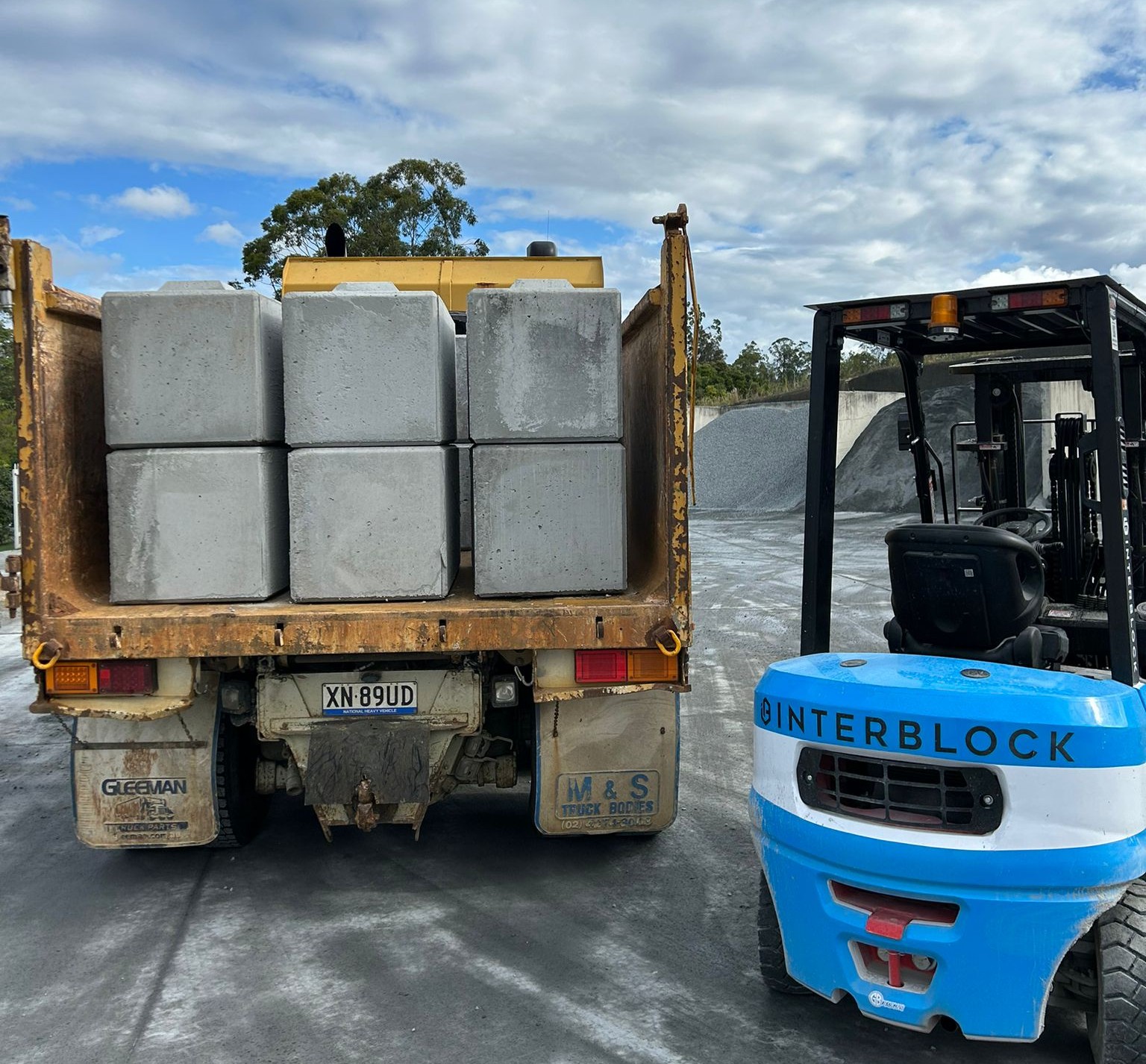
InfraBlock manufactures and supplies precast concrete blocks engineered for the demands of sloped Queensland sites. Our Large Interlocking Blocks deliver the load capacity required for tiered residential builds, commercial retaining structures, and civil works across South-East Queensland. Our Curvature Retaining Blocks handle contoured wall designs where straight runs aren’t practical. Every block is manufactured to AS4678, giving builders, developers, and homeowners certainty the product meets the engineering standard councils expect.
As a Gold Coast-based manufacturer and supplier, InfraBlock provides reliable supply, fast lead times, and product specifications matched to site requirements. Whether you’re planning a residential terraced backyard, a commercial hillside development, or a civil project requiring structural retaining walls for sloped sites, our precast solutions deliver the stability, drainage compatibility, and compliance certainty sloped sites demand.
Get the Right Retaining Wall System for Your Sloped Site
Sloped sites in Queensland reward planning and the right system from day one. Choosing precast interlocking blocks engineered to AS4678 takes the structural, drainage, and compliance risk out of the equation, leaving you with a wall built to hold for decades. InfraBlock supplies precast retaining solutions to builders, developers, and project teams across the Gold Coast and South-East Queensland.
Request a quote today and let us match the right precast solution to your sloped block. Call 0478 102 201 or email info@infrablock.com.au and we’ll get your supply confirmed and ready for your build.