Commercial retaining wall projects on the Gold Coast don’t run on goodwill and optimism — they run on schedule. When a retaining wall holds up civil works, it doesn’t just delay one trade; it pushes back every contractor behind it. Precast concrete blocks have become the default choice for Queensland developers and builders who can’t afford that kind of disruption.
Why Speed Matters on Commercial Retaining Wall Projects
On a residential project, a retaining wall delay is frustrating. On a commercial site, it’s expensive. Retaining walls often sit on the critical path of a civil programme — earthworks can’t be completed, drainage can’t be installed, and downstream trades can’t mobilise until the wall is in and certified. Every day the wall isn’t done is a day the whole programme slips.
Queensland’s commercial sector has tightened significantly on this. Developers across the Gold Coast and South-East Queensland are managing staged handovers, council inspection windows, and subcontractor schedules that leave little room for material delays or extended cure times. The retaining wall system you specify isn’t just a structural decision — it’s a programme decision.
How Precast Concrete Blocks Deliver Faster Installs
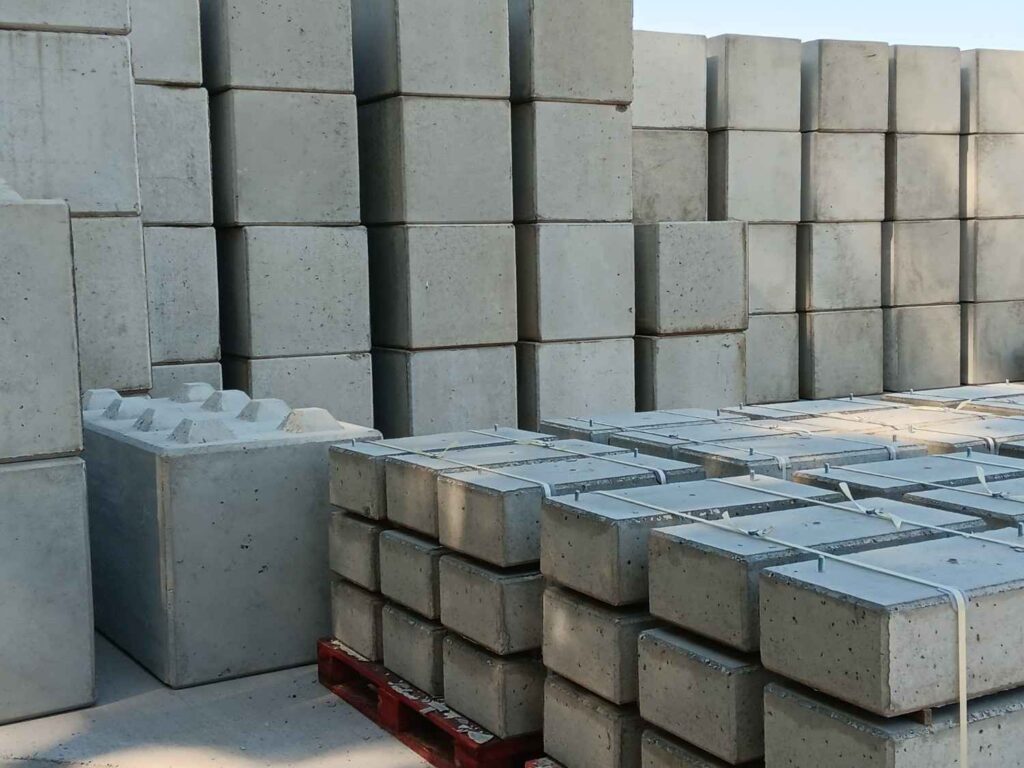
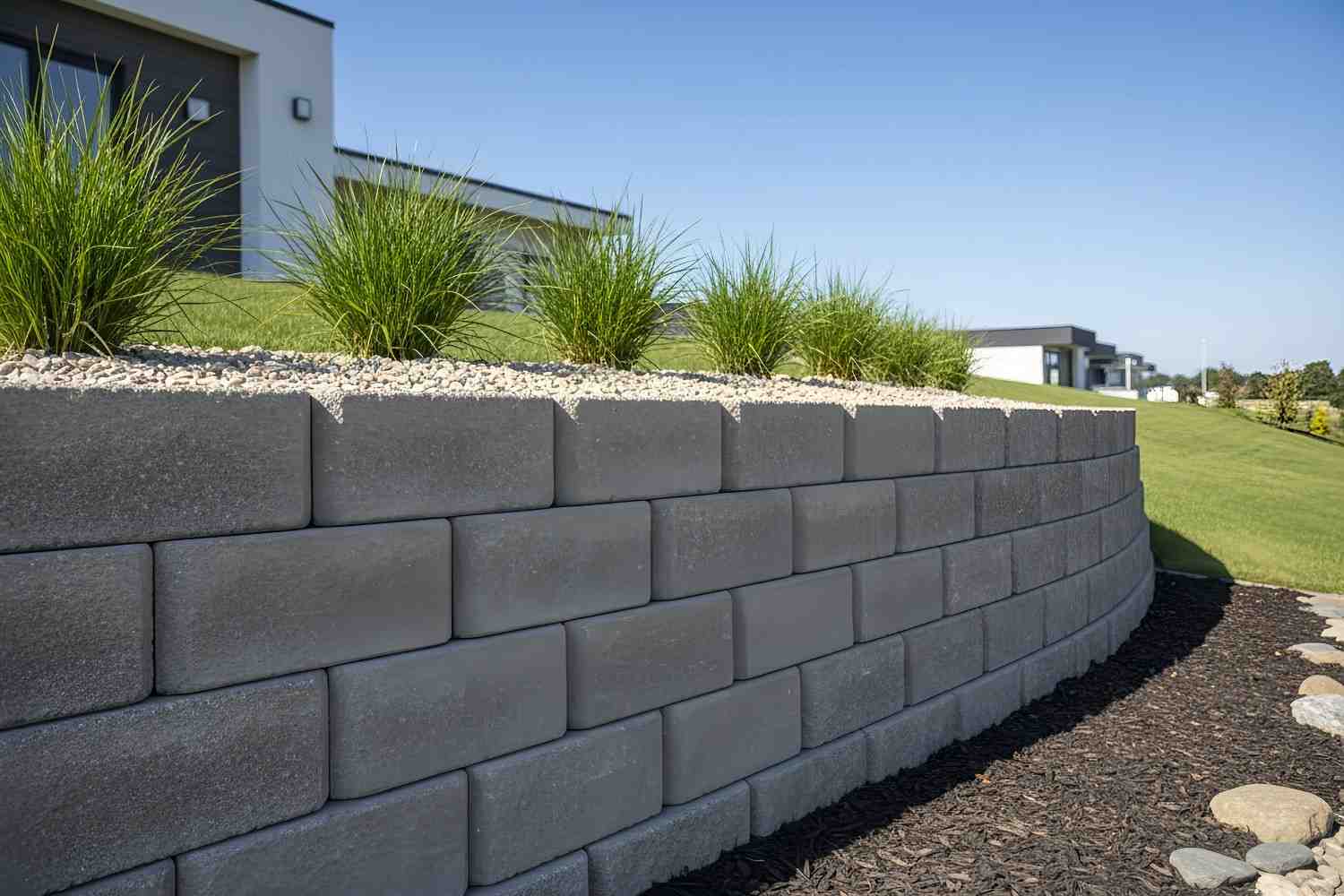
The core advantage of fast retaining wall construction with precast blocks is that most of the work happens off-site. Blocks are manufactured in a controlled environment, cured to structural specification, and arrive on site ready to place. There’s no formwork to build, no wet concrete to pour, and no waiting for a cast wall to cure before it can carry load.
The installation sequence is straightforward:
- Off-site manufacture: Blocks are produced and cured at the factory before leaving for site — no on-site curing period required
- Delivery to programme: Staged delivery means blocks arrive when the site is ready, reducing storage requirements on constrained commercial sites
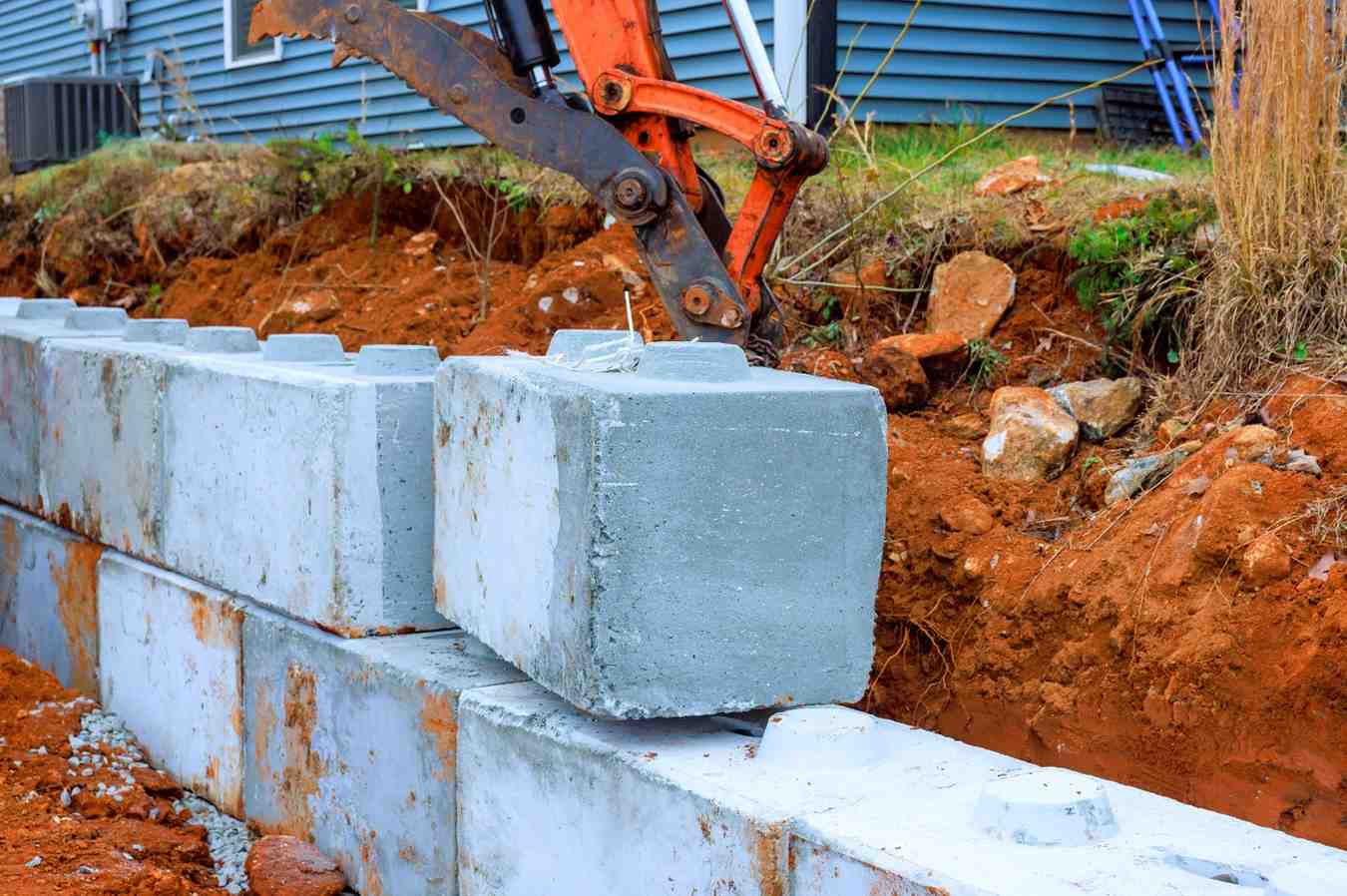
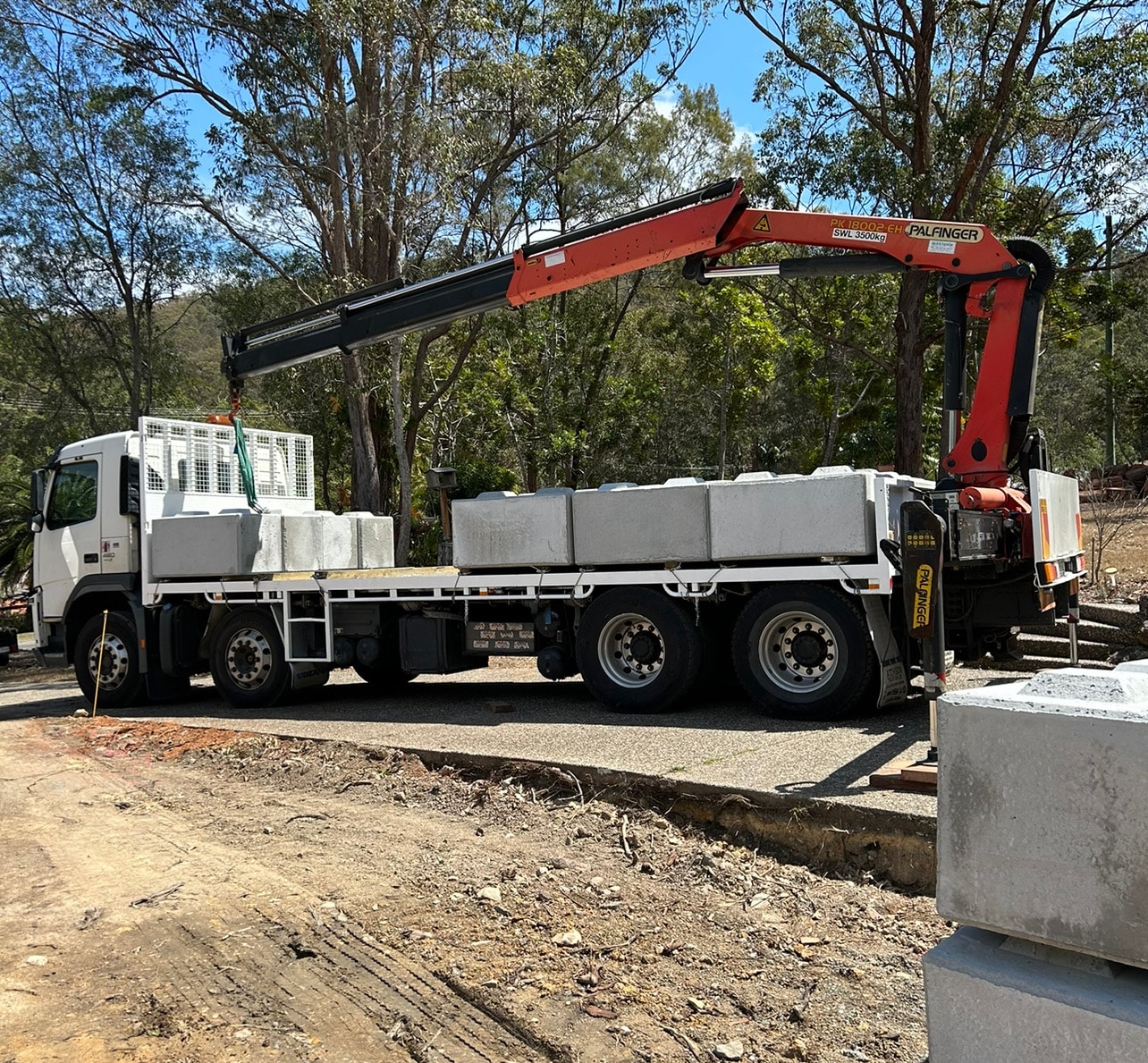
- Rapid placement: Standard plant, such as an excavator or truck hiab, drops blocks into position with no specialist formwork crew needed
- Immediate load-bearing: Once placed, blocks carry load. There’s no waiting period before the next stage can proceed
That last point matters more than it’s often given credit for. On a poured wall, even after the forms come down, project managers are working around cure timelines that stretch the programme. Precast eliminates that buffer entirely. For Gold Coast commercial projects where programme certainty matters, InfraBlock manufactures and supplies precast blocks built to AS4678 and delivered with lead times that keep commercial schedules on track.
Commercial Site Advantages for Queensland Builders
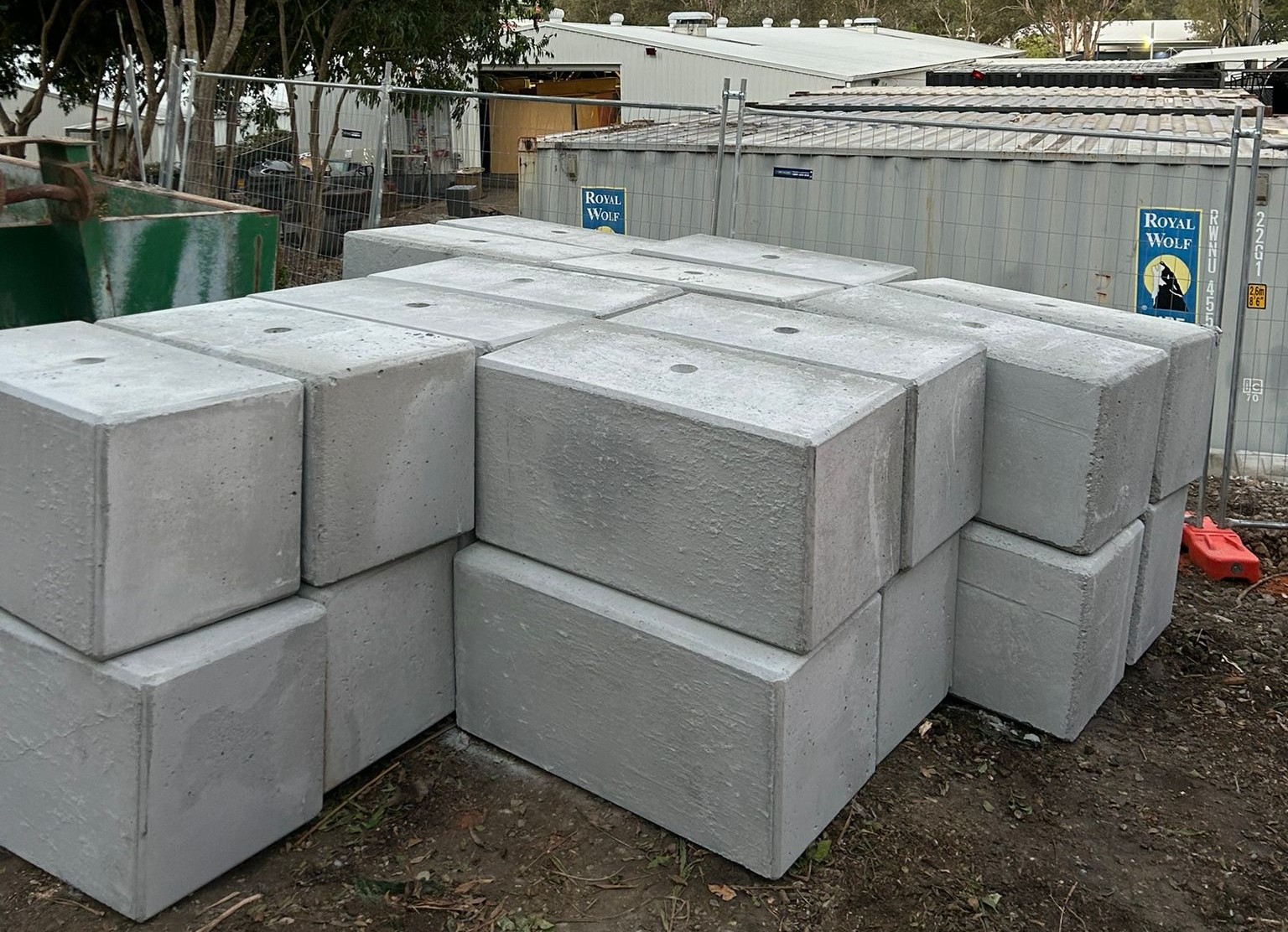
Speed at installation is only part of the picture. Controlled manufacture means every block leaves the factory meeting the same structural specification. That consistency simplifies engineering certification and reduces the risk of non-conformance issues that stall council approvals on commercial sites.
Labour dependency is also significantly reduced. Poured walls require formwork trades, finishing crews, and extended cure supervision. A precast block system needs plant operators and a focused crew — a meaningful efficiency when labour availability is tight or the programme can’t absorb extended trade rotations.
The other major advantage for Queensland builders is scalability. Modular precast systems can be extended, tiered, or staged across a development without the constraints of a monolithic poured wall. For builders working across challenging Queensland sites, this guide on commercial retaining structures covers how precast performs under those conditions.
Precast vs Poured-In-Place: A Comparison
For commercial project managers weighing up systems, the differences between precast concrete blocks and poured-in-place concrete are material across almost every decision factor.
| Factor | Precast Concrete Blocks | Poured-In-Place Concrete |
| Install time | Fast — blocks arrive ready to place | Slow — formwork, pour, and cure required |
| Cure time on site | None | Days to weeks depending on conditions |
| Weather dependency | Low — installation unaffected by rain | High — wet weather delays pours and curing |
| Labour requirements | Reduced — fewer trades, shorter crew time | Higher — formwork, finishing, and monitoring |
| Scalability | High — modular, staged delivery possible | Low — each section poured and cured separately |
| Reusability | Yes — blocks can be relocated or repurposed | No — permanent once poured |
| Quality consistency | Controlled — manufactured off-site | Variable — site conditions affect finish and strength |
For fast-track commercial projects in Queensland, the weather dependency and cure time rows are the ones that most directly affect the programme. Queensland’s winters are mild and largely dry, but Gold Coast sites can still receive significant rainfall through June and July. A precast retaining wall system keeps installation moving regardless.
What to Look for in a Precast Block System for Commercial Projects
Not all precast block systems are equal, and for commercial projects the specification decision matters. A few criteria worth working through before committing:
- Block size and load capacity: Larger format blocks cover more wall area per placement cycle, reducing crane time and installation hours. For high-load commercial applications — retaining structures supporting driveways, hardstand areas, or elevated structures — confirm the block specification handles the surcharge load
- Interlocking system: Interlocking designs distribute load through the wall structure more efficiently than simple stacked systems, which matters for walls carrying significant horizontal pressure
- AS4678 certification: Any retaining wall over one metre in Queensland requires engineering certification. Specifying a block system already manufactured to AS4678 removes a layer of documentation risk — check the council approval requirements if your project is in the Gold Coast City Council area
- Supplier lead times: For commercial programmes with fixed handover dates, supplier reliability matters as much as product quality. A locally manufactured block from a Gold Coast-based supplier reduces transport risk and keeps lead times predictable
- Site access compatibility: Large-format precast blocks require plant for placement. Confirm site access allows for the machinery needed — straightforward for most commercial sites but worth checking early on constrained blocks
For builders and developers across South-East Queensland, getting retaining wall supply confirmed early is the most direct way to keep it off the critical path. As a Gold Coast-based manufacturer and supplier, InfraBlock produces its full precast concrete block range locally, which means consistent availability, short lead times, and certification documentation ready for Queensland council submissions.
Frequently Asked Questions
How much faster is precast compared to poured-in-place retaining walls on a commercial site?
Significantly faster, and the gap widens on larger projects. Precast blocks arrive cured and ready to place, so installation begins as soon as blocks are on site and plant is available. Poured walls require formwork, the pour itself, and a cure period before load can be applied, typically adding days to weeks depending on dimensions and weather. On commercial sites where the retaining wall sits on the critical path, that time difference has a direct cost.
Are precast retaining wall blocks suitable for large or staged commercial projects?
Yes. The modular nature of interlocking concrete blocks is one of their strongest commercial advantages. Blocks can be staged across a delivery schedule to match site progress, extended as the project grows, and reused or repositioned on later stages. For Gold Coast developments constructed in phases, precast block systems allow each stage to be completed and certified independently.
Can precast blocks be installed during Queensland’s wet season or winter conditions?
Yes, precast blocks can be installed year-round across Queensland. Because they’re manufactured and cured off-site, wet weather doesn’t affect the product. Gold Coast winters are typically dry and mild, making them the ideal window for commercial retaining wall works. Even if rain arrives, installation can pause and resume without the material losses or programme penalties that apply to a wet pour.
Why InfraBlock Is the Right Supplier for Fast-Track Commercial Projects
InfraBlock manufactures and supplies precast concrete retaining wall blocks from the Gold Coast, serving commercial builders, developers, and civil contractors across South-East Queensland. Our product range is built specifically for the demands of commercial and civil projects. The Large Interlocking Blocks keep high-load commercial retaining structures moving on programme, while the Curvature Retaining Blocks handle designs where the wall isn’t a straight run. Both ranges arrive AS4678 certified and ready to place, with no curing delays, no formwork, and no hold-ups.
As a Gold Coast-based manufacturer and supplier, InfraBlock keeps product available and lead times predictable, which is exactly what commercial project managers need on a tight schedule. Whether you’re managing a staged Gold Coast development or a civil scope across South-East Queensland, our precast solutions are built to keep your project moving.
Get Your Commercial Retaining Wall Supply Confirmed
For commercial projects on the Gold Coast and across Queensland, getting your retaining wall supply locked in early is the difference between a wall that holds the project and one that breaks it. InfraBlock manufactures and supplies precast concrete blocks built for commercial-scale work, locally stocked, AS4678 certified, and ready to deliver to your site.
Request a quote or speak to our team today about your project requirements. Call 0478 102 201 or email info@infrablock.com.au and let’s get your supply locked in ahead of your build.