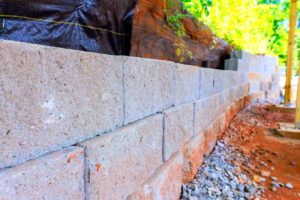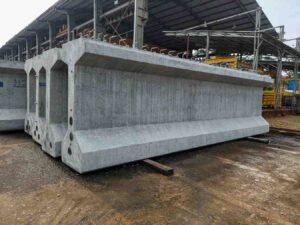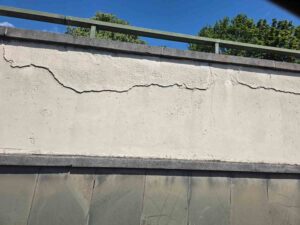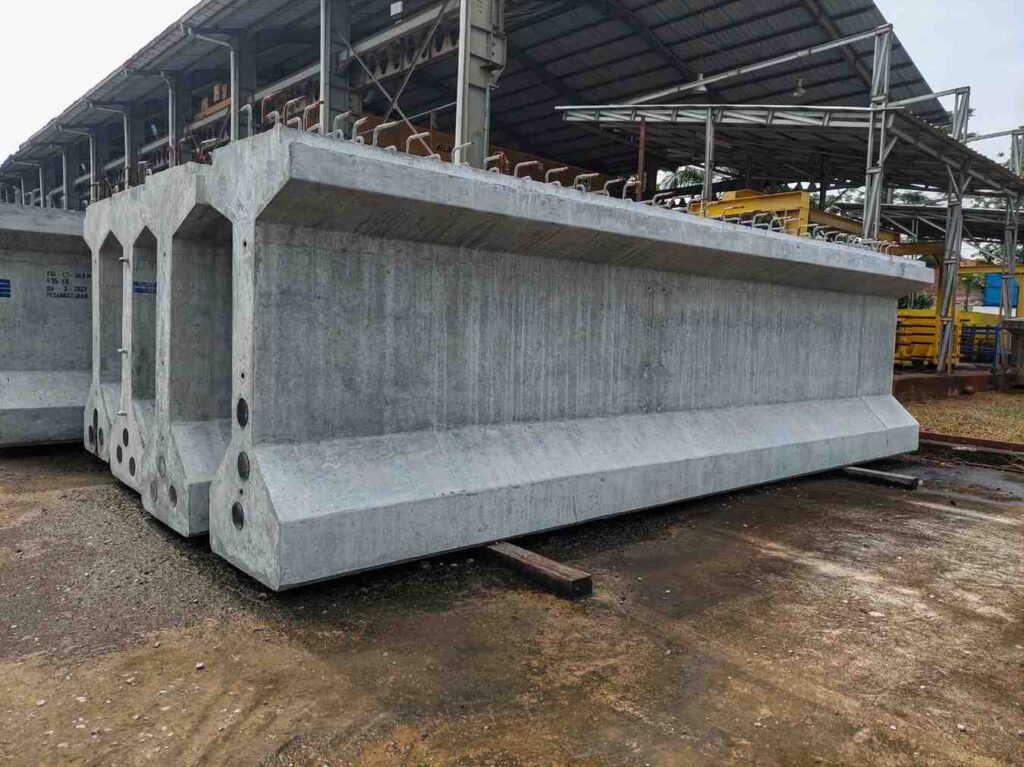
Every civil structure starts as a decision on paper, and the engineer specifying it has to choose materials that behave the way the design says they will. For earth-retaining and load-bearing work, precast concrete for civil infrastructure is often the answer, written into the spec before a single block reaches the Gold Coast site. Here is the engineering case behind that choice.
Why the Material Choice Sits with the Engineer
Specifying a material is not the same as buying one. When engineers specify precast concrete for a retaining or embankment structure, they commit the design to a product whose behaviour they can predict and stand behind. That decision answers to retained loads, site conditions and a required design life, not to whatever is quickest to source.
This is why a specifier cares less about how a wall looks on delivery day than about how it holds across decades of civil infrastructure projects, under traffic surcharge, ground movement and Queensland weather. Which block to buy is a separate question: matching a modular block system to the structure weighs size, load and site access against the job. The reasoning here comes earlier, in the properties that put precast into the specification in the first place.
Factory Control and Dimensional Consistency
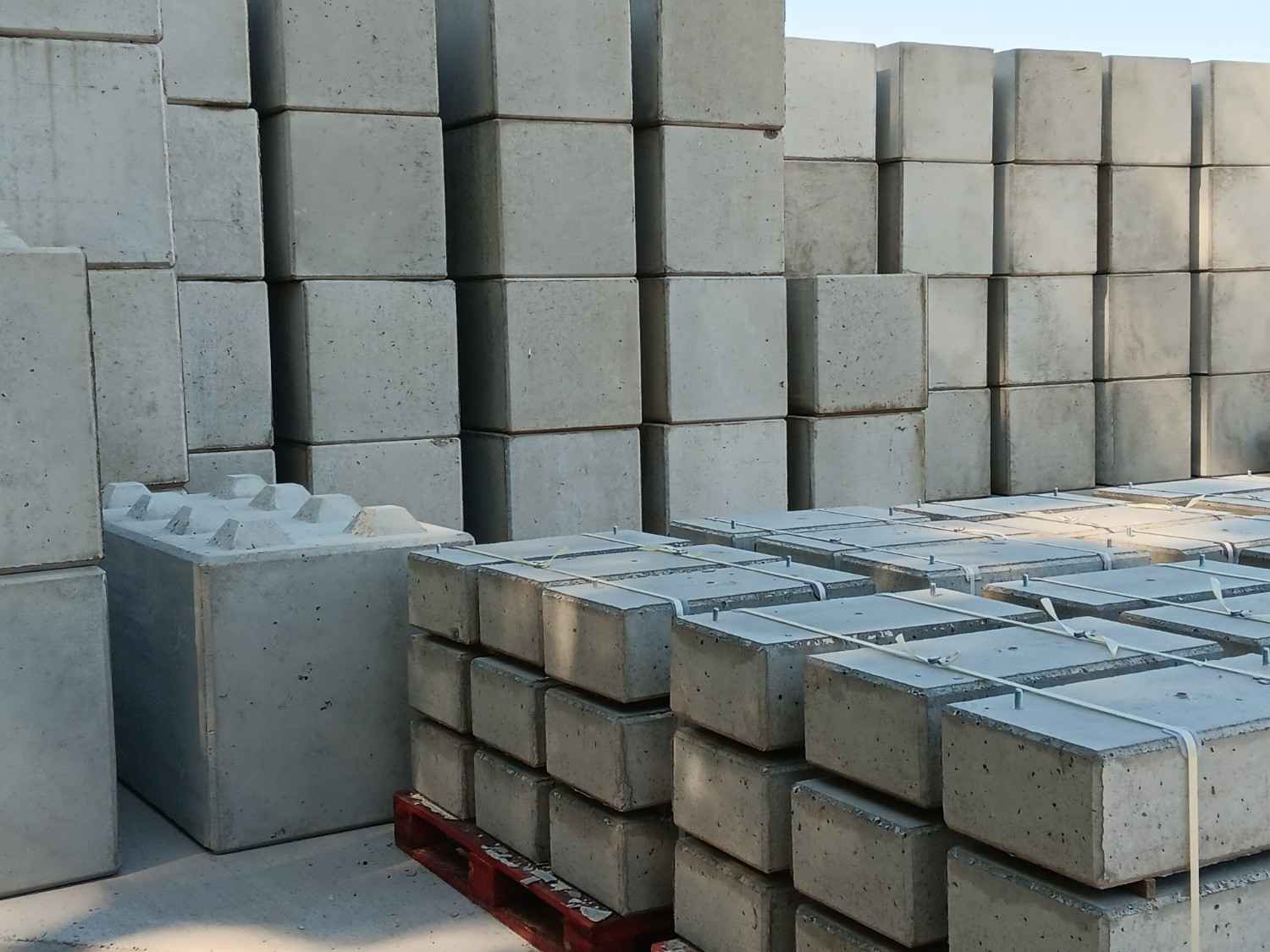
The strongest argument for precast starts in the yard, not on site. Blocks are cast and cured in a controlled factory environment, where mix, dimensions and curing conditions stay the same from one unit to the next. A poured wall takes its final properties from site conditions on the day, while each block arrives with those variables already settled.
For the engineer, that consistency is the point, because every unit in an engineered precast wall meets the same dimensional and structural tolerance and the structure that gets built matches the one that was drawn. That control also strips steps out of the on-site programme, which is one reason the blocks keep a commercial build moving on programme. On a specified job, though, that speed is a consequence of the consistency, not the reason a designer reaches for it.
Engineering Properties a Design Can Rely On
Consistency on its own is only useful if it translates into behaviour the engineer can design around. Because precast units are made to a known specification, their structural properties are repeatable, so the designer works from values the product will actually deliver rather than hedging against site variation.
That predictability is what makes engineered retaining blocks straightforward to write into a calculation, because the behaviours that matter are settled before the design is finalised:
- Load capacity: each unit’s structural load is known before it goes into the calculation
- Force transfer: the interlock moves load through the wall along a predictable path
- Behaviour under surcharge: how the structure responds to traffic or load above is understood in advance
That certainty keeps the design defensible when it reaches a certifier. For civil work, where the consequences of a wall underperforming are measured in more than cosmetics, a design built on predictable components is one that can be checked, approved and trusted to hold.

Durability Under Civil Exposure
Civil structures are built to stand for decades, often in conditions that would test any material. On the Gold Coast and across Queensland, that means wet seasons, saturated ground, coastal air and the constant push of retained earth, all working on the wall at once. Precast concrete suits that exposure because it is made for it.
Dense, factory-cured units resist the moisture and weathering that wear a structure down over a long service life. A well-designed wall also manages water around and behind the structure rather than relying on it draining through the wall face. That durability is a large part of why precast holds up so well across civil infrastructure work, and InfraBlock manufactures its precast range on the Gold Coast for exactly the conditions a civil structure has to survive.
Documentation Behind a Compliant Design
A specified design is only as good as the paperwork that supports it, and this is where precast quietly earns its keep. Units made to a known specification arrive with the product data an engineer and a Queensland council need, so the documentation is on hand rather than chased down during approval.
That matters most for precast retaining systems built for permanent civil duty, where the wall itself has to be engineered in accordance with AS 4678. The standard governs the design of the system rather than the individual block, so the design and sign-off stay with the project’s engineer and certifier while the blocks are chosen to suit that design. What the standard asks of a wall is worth reading separately, because it reaches well beyond the blocks themselves.
Good documentation is also what keeps a civil programme predictable, since fewer approval surprises mean fewer stalls late in the job. InfraBlock’s precast concrete blocks come with the technical information behind them, so your engineer can specify with confidence and your council submission has what it needs.
Frequently Asked Questions
Why is precast specified over poured concrete for civil structures? Because precast is produced to a known spec in a controlled factory, its structural behaviour is consistent and repeatable, which is exactly what a design needs to rely on. Poured concrete takes its final properties from site conditions on the day, adding variation a designer would rather remove. Across a long civil service life, that predictability usually settles the question.
Is precast suitable for permanent civil works? Yes. Precast units built for structural duty are designed for permanent earth-retaining and load-bearing work, carrying load across the decades a civil asset has to last. The design still has to suit the specific loads, height and site, which stays the engineer’s call.
Who is responsible for a civil retaining wall’s design? The project’s engineer designs the wall for its loads, height and ground conditions, and a certifier confirms the built structure matches that design. A block supplier’s role is to produce units that meet what the design specifies, not to design or sign off the wall. Keeping those roles clear is part of a clean approval.
What standard applies to a civil retaining wall? In Australia, retaining wall systems are engineered in accordance with AS 4678, the standard for earth-retaining structures. It governs how the wall system is designed and certified rather than acting as a stamp on an individual block, so the blocks are chosen to suit a design built to the standard. The thresholds that trigger it vary by council across the Gold Coast and Queensland.

Why Civil Specifiers Choose InfraBlock for Precast Supply
InfraBlock is the Gold Coast’s manufacturer and supplier of precast concrete blocks for the engineers, developers and civil contractors who specify them into serious earth-retaining work. We produce our full range locally and hold it to a consistent standard, unit after unit, so the blocks reaching your civil site are the ones your design was written around. That single focus on manufacturing and supply is what lets us keep quality tight across every block that leaves the yard.
Our Large Interlocking Blocks carry the mass and load that civil retaining structures demand, stacking into stable walls your engineer can design to. Where a structure stays on show, our Smooth Large Interlocking Blocks bring the same structural performance with a clean finished face. Both are suitable for use in retaining wall systems engineered in accordance with AS 4678, with the product data your engineer and council need kept close at hand. That is how we keep our blocks ready for the systems your engineer designs.
Specify Precast With Supply You Can Build Around
A specification is only as strong as the blocks that deliver it, and getting the supply right is what turns a sound design into a structure that holds. InfraBlock is the Gold Coast precast manufacturer and supplier civil projects across Queensland rely on to put the right blocks behind an engineered design.
Talk to our team about the structure you are specifying and we will match the right blocks to your design and programme. Call 0478 102 201 or email info@infrablock.com.au, and we will get your supply confirmed and ready for the civil site ahead.