Heavy rain stops, you walk outside, and the wall that held your slope yesterday is leaning, cracked, or already down. When the ground shifts after a downpour, the next few hours decide whether you face a contained fix or a full rebuild. Knowing the right steps for emergency retaining wall repair keeps a bad morning from turning into a dangerous and expensive one.
Warning Signs Your Retaining Wall or Slope Is Unstable
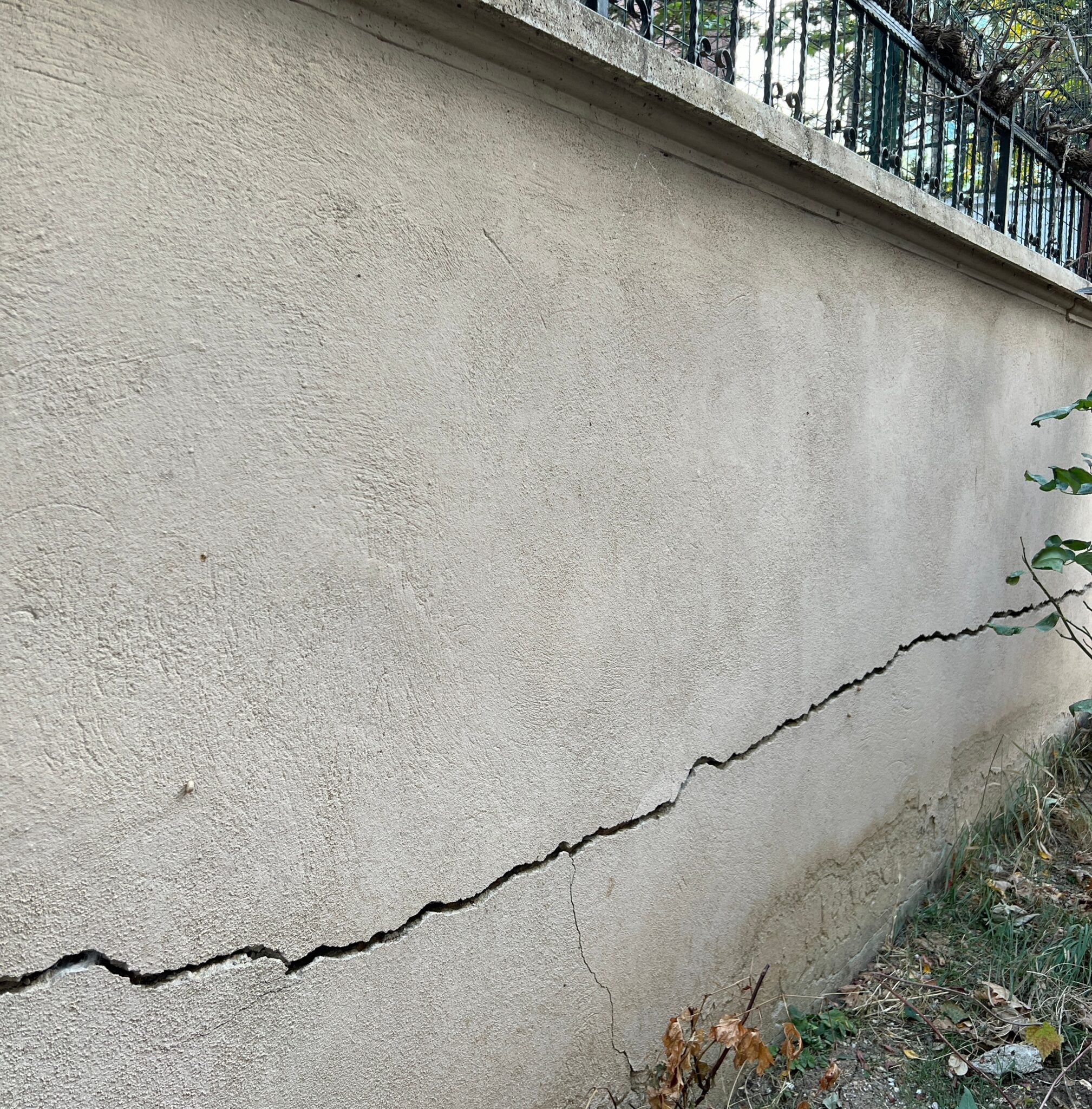
A failing wall almost always warns you before it gives way. After heavy rain and soil movement, those early signs are the difference between a planned repair and an emergency callout once the next storm rolls in.
Watch for these signals on the wall and the ground around it:
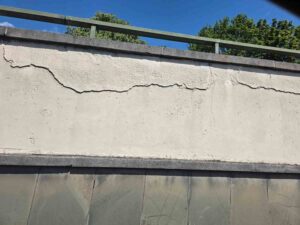
- New cracks: Fresh cracking through blocks or mortar joints points to load the wall is no longer holding
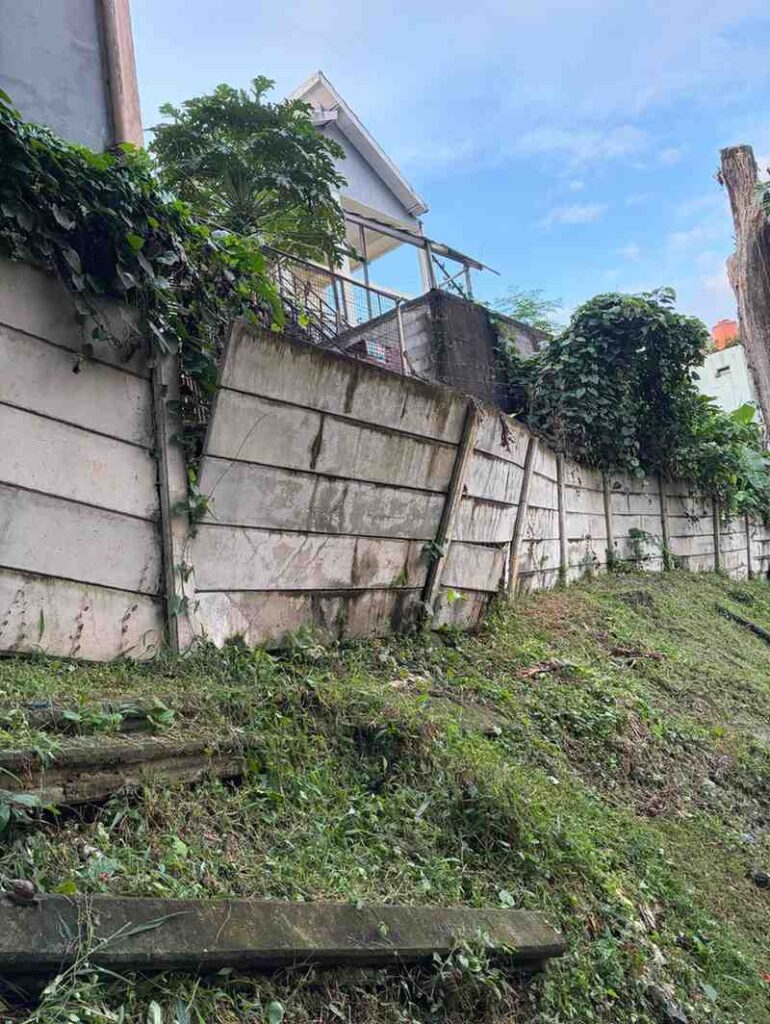
- Leaning or bulging: Any forward tilt or a belly in the wall face means the structure is on the move
- Water at the base: Water seeping low on the wall shows pressure is building up behind it
- Soil pulling away: Gaps opening between the wall and the ground behind it signal the backfill is shifting
- Slumping ground: Soft or sliding earth above the wall warns the slope itself has become unstable
Most of these signs trace back to the same preventable retaining wall failures that surface across Gold Coast storm season. A flood-damaged retaining wall rarely gives way without warning, and these are the ways it tells you trouble is coming.
What to Do Immediately After Heavy Rain or Slope Failure
The first hours after a wall comes down shape how much extra damage follows and how big the rebuild becomes. Work through these steps in order, whether you own the property or you are the contractor on site.
- Secure the area: Keep people clear of the wall and the slope above and below it, and move any vehicles or heavy loads off the ground above until the site settles
- Document the damage: Photograph the cracking, lean, or ground movement from several angles before any clean-up, for your insurer, council, and engineer
- Relieve surface water: Redirect water pooling behind the wall away from the failure where it is safe, easing the pressure that drives further movement
- Get an engineering assessment: Have a structural or geotechnical engineer inspect before any work, reassessing surcharge loads and whether the failure has undermined nearby footings or services
- Check council requirements: In Queensland, damage to walls over one metre or near boundaries can trigger a reporting or approval obligation, so confirm with your local council early
- Plan the rebuild and supply: Scope the urgent retaining wall repairs to the engineer’s revised spec and source certified materials that fix the original weakness rather than replace like for like
That final step is where fast, certified supply keeps a rebuild moving. InfraBlock manufactures and supplies precast concrete blocks across the Gold Coast, certified and ready for placement once the engineer’s spec is set.
When to Repair, Reinforce or Replace
Not every damaged wall needs to come down. Deciding between an urgent wall repair and a full rebuild is rarely guesswork once an engineer has assessed how far the failure has gone.
The response usually falls into one of three categories:
- Repair: Minor cracking or a single displaced section can often be fixed without rebuilding the whole wall
- Reinforce: A structurally sound wall under heavier load may need added drainage, anchoring, or a stronger base
- Replace: A leaning, bulging, or collapsed wall has lost its integrity and needs full replacement
A flood-damaged retaining wall on a slope is the hardest call of the three, because what looks like surface damage can sit on top of a deeper landslip. In these cases, slope failure repair and rebuilding the wall are one and the same job.
Why Drainage and Erosion Control Matter in Queensland Conditions
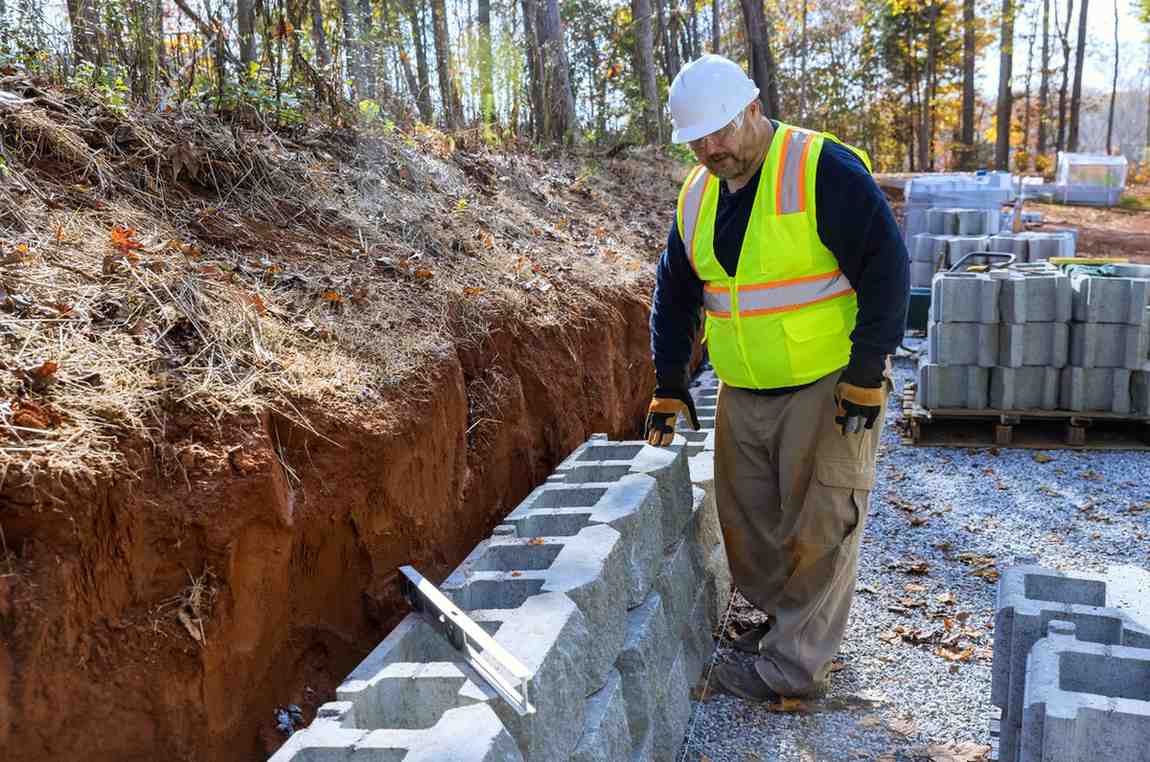
Water brings most walls down, not weight. When heavy rain saturates the clay-heavy soil common across Queensland, that water becomes the single biggest load a retaining wall has to resist.
Drainage is what lets that water escape before pressure builds. Without it, hydrostatic pressure stacks up behind the wall until something gives, which is exactly why erosion control sits at the centre of any lasting fix.
A sound drainage setup usually combines a few elements:
- Weep holes: Openings through the wall let trapped water drain instead of pooling behind it
- Gravel backfill: Coarse aggregate behind the wall gives water a clear path down and out
- Perforated pipe: An ag pipe at the base carries water away from the footing
- Geotextile fabric: A filter layer stops soil clogging the system while still letting water through
Erosion control retaining walls only last when the blocks are backed by effective retaining wall drainage that gives water a way out. Get the drainage right and the wall holds firm through the Gold Coast’s wettest months.
Slope Recovery Options for Queensland Sites
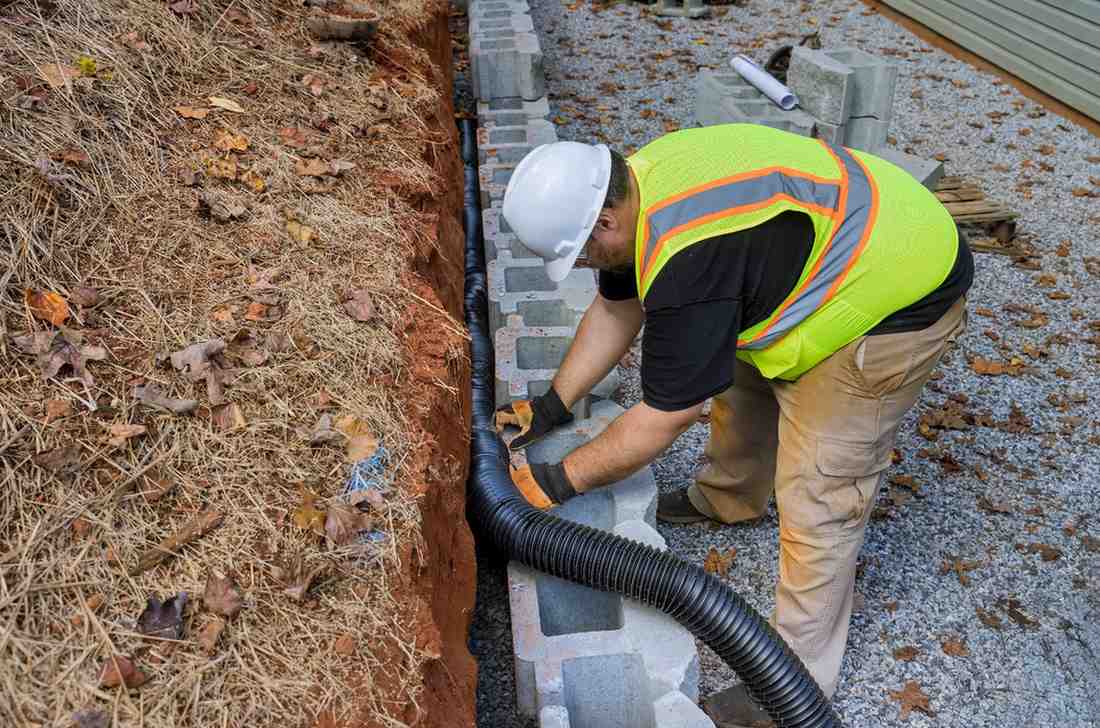
A failed retaining wall is often the symptom of a wider slope problem, not the whole of it. The right slope stabilisation depends on the slope angle, the soil, and how far the ground has already moved, and an engineer will match the approach to the site.
- Single-tier replacement: On a moderate slope with one level change, a correctly engineered and drained wall rebuilt in place usually solves it
- Tiered systems: On steeper ground, stepping the retention across two or more lower walls spreads the load and improves long-term stability
- Drainage-led rebuilds: Where trapped water caused the failure, upgrading the drainage behind the new wall matters as much as the wall itself
- Geotechnical stabilisation: Where deeper ground movement is driving the failure, an engineer may call for ground anchors or soil nails before any wall goes back
Modular systems suit most of these approaches because they can be staged and adjusted as the ground is reworked, which is why retaining wall systems built for sloped blocks hold up well across Queensland’s uneven terrain.
How Modular Concrete Block Systems Help with Emergency Stabilisation
A modular retaining wall system changes the maths once a wall is down and more rain is forecast. The blocks arrive cured, certified, and ready to place, with no formwork and no wet pour waiting to set. That speed is the whole point of emergency retaining walls that have to be back in service before the next downpour.
Stabilising the ground comes first, not last. Precast blocks let a rebuild start from a solid, free-draining base, bringing slope stabilisation and the new wall together rather than tackling them in separate stages. Their weight and interlock resist the soil pressure that pushed the original wall over, turning a temporary patch into a structure built to hold through the next big downpour.
Staged rebuilds work the same way, with blocks placed as access allows and extended as the slope is reworked. InfraBlock’s precast concrete blocks are built for exactly that kind of phased, fast rebuild.

Frequently Asked Questions
What should I do immediately after a retaining wall fails?
Keep clear of the wall and divert water away from it first. Once the area is safe, photograph the damage and arrange a structural assessment before any rebuild, since a wall over one metre needs engineering certification in Queensland.
Can a leaning retaining wall be repaired, or does it need replacing?
A wall that is leaning or bulging has usually lost structural integrity and needs replacing rather than repairing. Minor cracking or a single displaced section can often be repaired, but movement in the wall face is a clear sign the structure is failing.
How soon after heavy rain should I act on a damaged wall?
Act as soon as the area is safe to approach, ideally within the first day. Soil movement can keep going for days after the rain stops, so the longer a damaged wall is left, the more likely a partial failure becomes a full collapse.
What causes sudden slope failure after a storm?
Saturated soil and poor drainage are the main causes. When water cannot escape from behind a wall, hydrostatic pressure builds until the ground gives way, which is why erosion control is central to any lasting fix.
Do I need an engineer before rebuilding a failed retaining wall?
Yes, any retaining wall over one metre in Queensland requires engineering certification under AS4678. An engineer confirms whether slope failure repair, reinforcement, or full replacement is the right path before work begins.
Why Choose InfraBlock for Emergency Wall Replacement
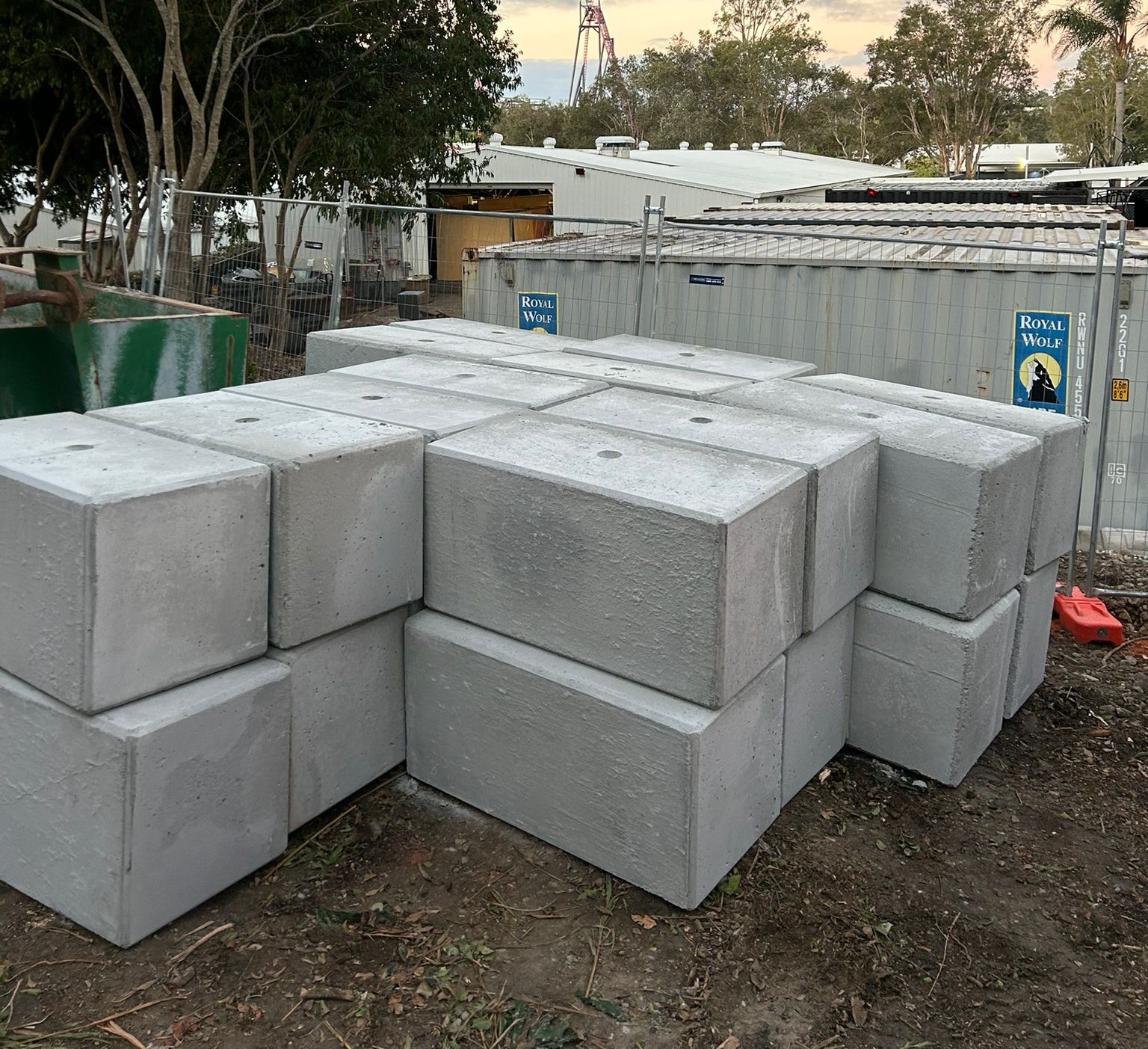
InfraBlock is a Gold Coast manufacturer and supplier of precast concrete retaining wall blocks, engineered for the coastal and high-rainfall conditions that push retaining walls to failure. Every block leaves the facility certified to AS4678 and ready to place, which removes a layer of documentation risk and keeps an urgent rebuild moving rather than waiting on a wet pour to cure.
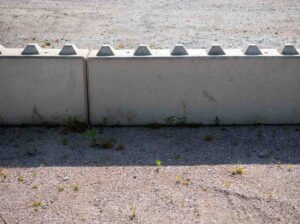
Our Large Interlocking Blocks deliver the load capacity needed to hold reworked slopes and high-surcharge sites, while our Smooth Large Interlocking Blocks add a cleaner finished face where the rebuilt wall stays on view. Both are engineered to resist the soil pressure and saturation that bring walls down across South-East Queensland, and we supply them ready for the urgent rebuilds those conditions create.
Get Your Slope Stable Before the Next Downpour
A failed wall is not just damage, it is a risk every time the sky darkens. Acting fast on the right materials is what separates lasting retaining wall stabilisation from the same failure next season. InfraBlock supplies precast concrete blocks engineered for the storm and slope conditions that bring Queensland walls down, giving you a solid, certified base to rebuild on.
Request a quote or speak to our team about supply for your rebuild, whether that is one failed section or a full slope. Call 0478 102 201 or email info@infrablock.com.au and we will have the right blocks ready for your site.