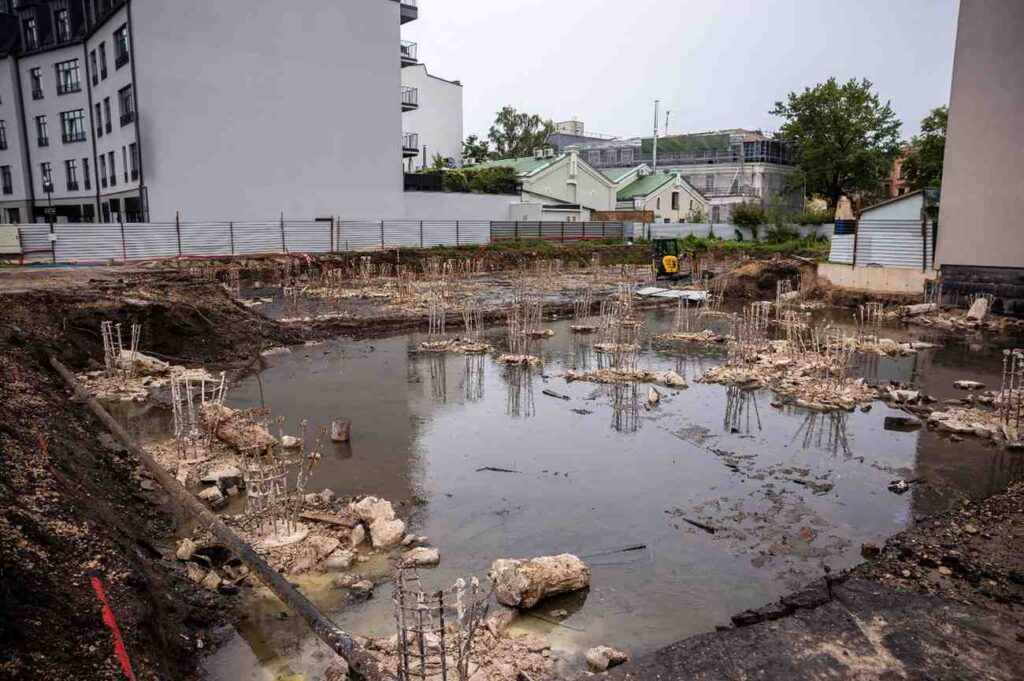
A waterlogged construction site doesn’t just cost a day, it stalls earthworks, locks out trades, and puts the whole programme at risk. When heavy or sustained rain saturates the ground on a Gold Coast build, the question isn’t whether you’ll lose time but how much. Getting back on track starts with understanding what’s happening underfoot and dealing with it in the right order.
What Leaves a Construction Site Saturated and Unworkable
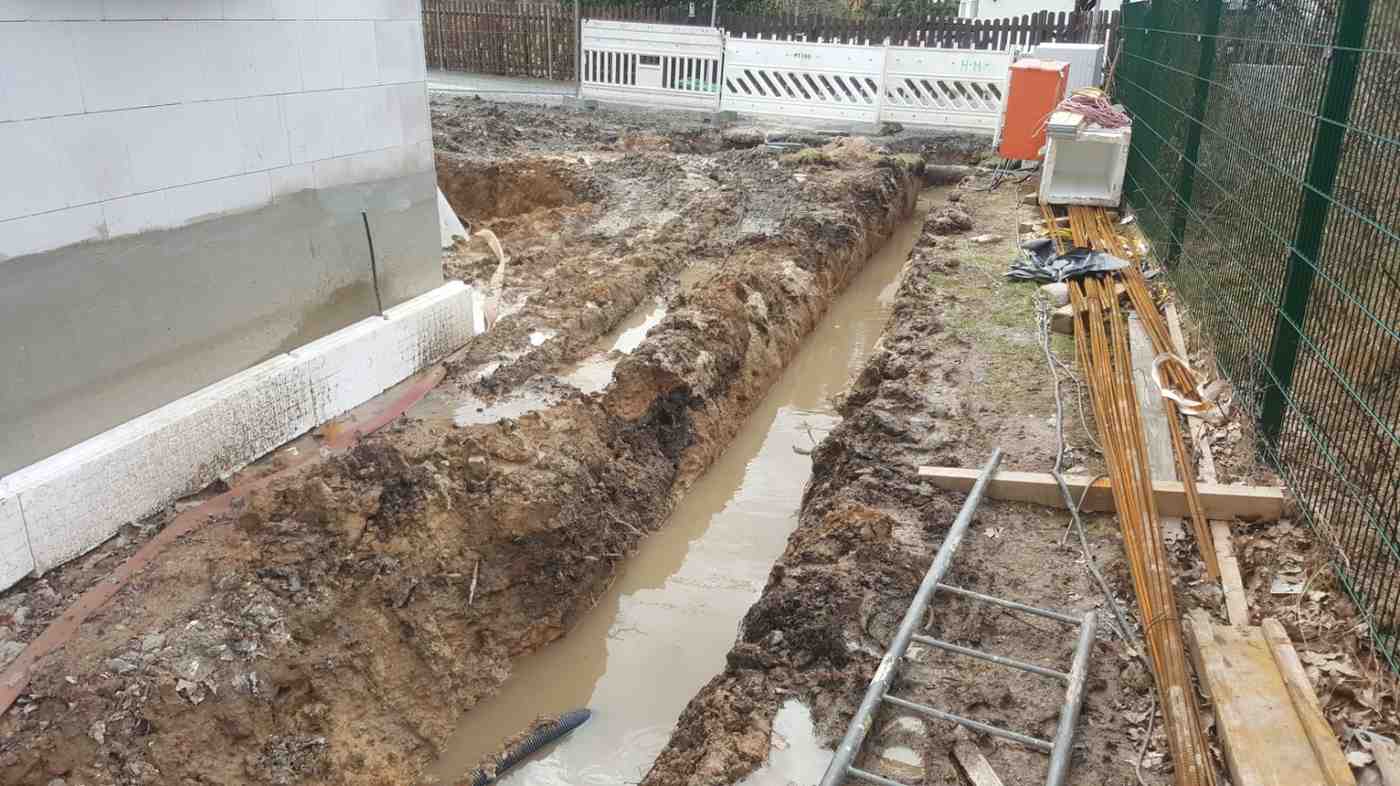
Construction sites hold water far more readily than undisturbed land. Once the topsoil is stripped and the subgrade exposed, the natural drainage paths that would carry rain away are gone. Cut-and-fill work then compacts the ground further, leaving low points where water collects and sits.
Saturated site conditions develop fastest where clay content is high, which is common across much of South-East Queensland. These reactive soils shed water rather than absorbing it, so sustained rain can turn a manageable wet patch into a bog within hours. Often the underlying cause is drainage that was never planned for, and poor site drainage is what turns a rain event into days of lost programme.
Safety First: What to Assess Before Work Restarts
Returning to a site after heavy rain isn’t just a matter of waiting for the ground to firm up. Saturated ground behaves differently under load, and remobilising too early creates real risk. Before trades and plants move back on, a few things need checking.
Assess each of these before reopening the site:
- Ground bearing capacity: soft ground that deflects underfoot may not carry machinery safely, so a probe or plate load test gives you a working baseline
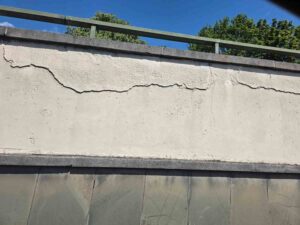
- Slope and embankment stability: cut faces subject to sustained wetting need a visual check for cracking, bulging, or seepage before work resumes nearby
- Sediment movement: soil shifted at the base of a slope or behind a temporary structure is an early sign of deeper instability
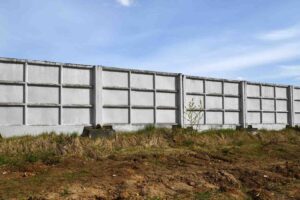
- Barrier and fencing integrity: perimeter fencing and any temporary retaining should be confirmed still in position before the site reopens
Where cut faces exceed a metre, where visible slope movement has occurred, or where structures sit above a saturated embankment, a geotechnical engineer should confirm conditions before work restarts. The same soil left unmanaged here is what sits behind most retaining wall failures once it starts moving.
Ground Stabilisation Methods to Get the Site Working Again
With the site assessed as safe to enter, site stabilisation follows a clear order: get the water off, firm up the surface, then hold anything that needs holding. The right approach depends on how saturated the ground is and how fast the programme needs to move.
A practical sequence looks like this:
- Clear the standing water: interceptor drains, sump pumps, and diversion channels get surface water off the ground, with active pumping where it has pooled in excavations
- Dewater the low points: pump out saturated excavations and hollows so they can begin to dry
- Improve the drainage: address the blocked or missing drainage that let water accumulate in the first place
- Let the ground recover: give saturated areas time to dry and firm before loading them
- Build a working platform: a geotextile and crushed rock layer restores plant access without waiting for full dry-out, the fabric stopping the aggregate from punching into soft subgrade
Worked through in order, these steps turn an unworkable site back into one where crews can move on. On commercial jobs it’s also worth confirming early what engineering certification and drainage sign-off will be required before permanent works proceed.
Practical Retaining Solutions for Wet Sites
Waterlogged site solutions don’t stop at drainage. Even with the surface stabilised, some ground needs more than a dry platform, so where an embankment is holding saturated soil, or a cut face has to stay put while the site recovers, retaining is the practical next step.
The choice usually comes down to how long the support needs to last:
- Temporary retaining: holds unstable ground while the site dries and firms, then repositions or lifts out as conditions improve
- Permanent retaining: goes in once the ground is stable and the design is confirmed, carrying the long-term load the finished site relies on
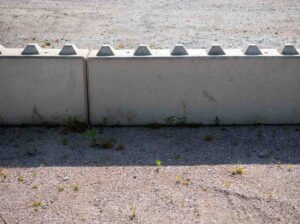
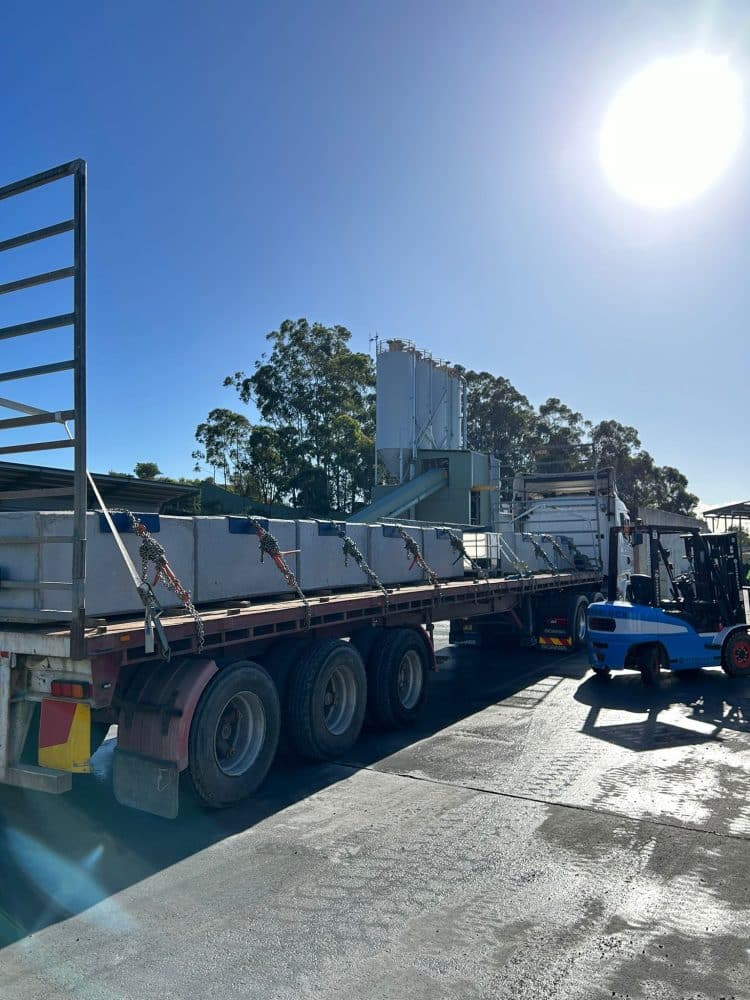
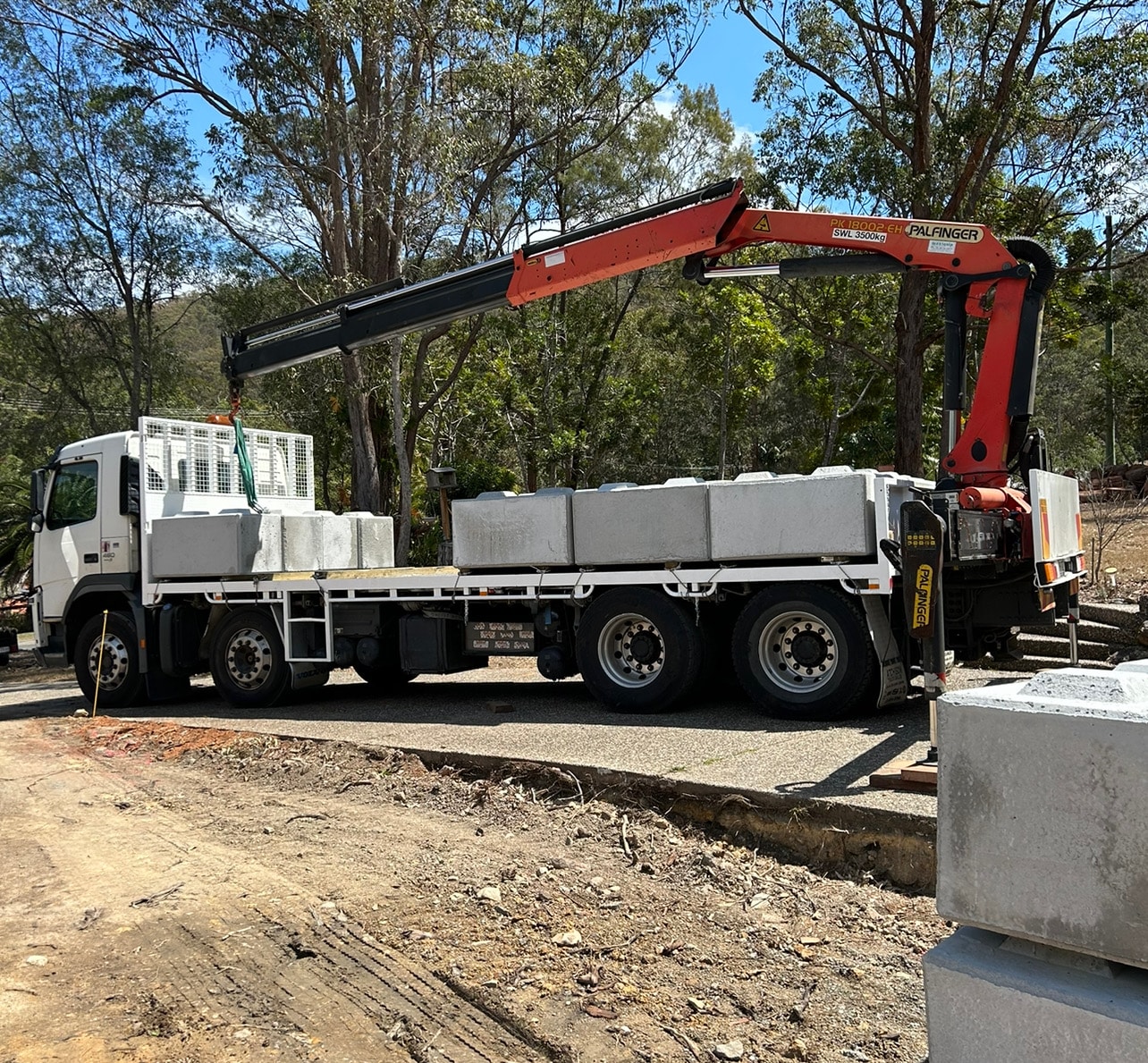
Precast interlocking blocks suit both. They arrive certified and ready to place with a standard excavator or hiab plant. With no formwork to build and no curing before they take load, temporary retaining walls can go in as soon as an area is accessible. In many cases the same blocks placed as temporary support later become part of the permanent works, saving a second phase.
As a Gold Coast manufacturer and supplier of precast concrete blocks, InfraBlock supplies the blocks these retaining solutions are built from, ready when your site is.
Protecting the Site While the Ground Recovers
Stabilising the ground counts for little if the next shower floods the site again. While saturated areas dry and firm, the job is to keep more water off them and protect the parts of the site already working.
A few practical measures make a real difference:
- Divert runoff early: shallow interception trenches upslope of open excavations steer water away before it reaches the cut face
- Bund exposed areas: temporary earth or sandbag bunding around open zones slows water ingress and buys time for drainage to work
- Cover cut faces: heavy-duty sheeting over exposed embankments reduces direct saturation and slows erosion on steeper faces
- Protect haul routes: road base or temporary matting keeps access trafficable, since construction delays multiply once plant churns tracks into mud
The aim is steady progress on the firm ground while waterlogged ground catches up, rather than a stop-start cycle every time the weather turns.
Getting Your Project Back on Programme
With the ground stabilised and protected, the focus shifts to clawing back lost time. A stalled project rarely recovers on its own, and the order you restart matters as much as the stabilisation work itself.
Recovery works best when it follows a set order, from assessing the ground through to bringing trades back once it’s stable. The programme decisions around that sequence protect the schedule as much as the fieldwork does:
- Reset the programme realistically: map what can proceed now against what still depends on the ground drying
- Bring trades back in order: start with the work that supports later stages, rather than everything at once
- Confirm ground and design early: lock in engineering and any retaining design before committing crews
- Plan supply ahead: order materials early so they’re ready the moment the site is
Retaining work is a common cause of construction delays after wet weather, because the trades behind it can’t move until it’s done. InfraBlock’s precast concrete blocks arrive ready to place, keeping the wall off the critical path and giving the site a fast, certain way back to full production.
Frequently Asked Questions
How long does a waterlogged site take to dry out?
There’s no fixed timeframe, it depends on soil type, drainage, and the weather that follows. Clay-heavy soils across South-East Queensland can hold water for weeks without intervention, while sites with established drainage and active pumping recover far faster.
Can you build a retaining wall on saturated soil?
Precast interlocking blocks can be placed in wet conditions because they need no formwork, no wet pour, and no curing before they carry load. Ground bearing capacity still has to be assessed before placement, and permanent works may need a geotechnical check first.
What causes construction site flooding in Queensland?
Disturbed topsoil, subgrade compacted by earthworks, and rainfall that outpaces the site’s drainage all combine to flood a site. Queensland’s clay-rich soils and intense wet-season rain leave sites without active stormwater management exposed from the first big fall after the ground is opened.
Does heavy rain affect retaining wall footings?
Yes, saturated soil has reduced bearing capacity, so footing depth and preparation may need reassessing after a significant rain event. A geotechnical check before placing permanent retaining on heavily saturated ground is sensible, especially on clay.
When should a flooded site be escalated to an engineer?
Escalate when slope movement is visible, when water is undermining structures or boundaries, or when conditions have changed materially from the original assessment. In Queensland, work health and safety obligations apply wherever ground instability puts workers at risk.
Why Choose InfraBlock for Retaining Waterlogged Ground
InfraBlock is the Gold Coast’s leading manufacturer and supplier of precast concrete blocks, trusted by builders, developers, and civil contractors across South-East Queensland to keep sites supplied when conditions turn. Every block leaves certified to AS4678, ready to place without curing delays or compliance uncertainty on delivery.
Our Large Interlocking Blocks carry the mass and structural capacity of heavier retaining demands, from temporary holding walls through to permanent works on saturated or unstable ground. The Smooth Interlocking Block offers the same structural performance where a tidier finished face is called for. Both are modular, reusable, and certified for the range of conditions a wet Gold Coast site can present.
Get Your Site Stabilised and Back to Work
When rain stalls a build, working through a saturated site in the right order is what separates a short disruption from a drawn-out programme loss. InfraBlock supplies the certified precast blocks builders and developers across the Gold Coast and South-East Queensland rely on to hold ground and get moving again.
Request a quote today and keep your build moving through the wet season. Call 0478 102 201 or email info@infrablock.com.au to talk through the right blocks with our team and get supply lined up around your programme.